On the 8,500-acre Wade Berry Ranch, Zenith Volts is building one integrated campus where clean power, advanced factories, and a local workforce come together. Six industries, powered by 24/7 zero-emission energy, all built to employ Chaves County.
Most large projects import their power, their products, and their workforce. Zenith Volts does the opposite. It generates its own clean power, manufactures the equipment it needs on site, and trains local residents to run it. The AI data center anchors the economics: its contracted revenue capitalizes the factories, the jobs, and the training, keeping that value in Chaves County instead of sending it elsewhere.
Own clean power, produced on site, 24/7.
Equipment and products built locally.
Local residents run every operation.
Value stays in Chaves County.
Co-located on the same ground, sharing the same clean-power backbone. Each line can stand alone, but together they close the loop: energy, materials, compute, and agriculture, all reinforcing one another.
Domestically produced liquid-sodium cells for grid and industrial storage.
Zero-emission solid-oxide power generation, no flame, no smokestack.
Green steel and aluminum re-refined from scrap using clean campus power.
Hyperscale data centers, behind the meter, high-density modular build.
Nano graphene-enhanced concrete, basalt-fiber rebar, and 3D printing.
Closing the loop with local agriculture through in-county NPK production.
Cattle keep grazing. Agrivoltaic solar-sharing keeps the land a working ranch.
Chaves County won't just host these factories, it will sell into the largest industrial markets on earth. Worldwide demand for what this campus produces adds up to more than $2 trillion a year by 2030.
Third-party market estimates; ranges vary by source. This campus represents a fraction of one percent of its addressable markets.
Chaves County has the land, the sun, the natural gas, and the workforce to host advanced manufacturing. Historically those high-wage industries were built elsewhere. Co-locating the energy and the factories on the same ground changes that.
About 280 sunny days a year, among the strongest solar resources in the U.S., and the cheapest way to power energy-hungry factories.
A fully executed Mack Energy supply of pipeline-quality sweet gas, feedstock for fuel-cell power and high-temperature industrial heat.
One contiguous 8,500-acre site, already zoned and permitted, big enough for every industry plus its own power generation.
Federal Energy Community status improves the economics of clean-energy and manufacturing investment across the campus.
Agricultural, mechanical, dairy-automation and oilfield skills translate directly into plant operations, supported by ENMU-Roswell and NMSU.
Driven by AI computing, domestic battery supply, and U.S. metal independence, demand that doesn't track the local commodity cycle.
Modular, behind-the-meter AI data centers deliver high-density compute in factory-built modules, powered directly by the on-site clean-energy backbone.
Because the compute sits behind the meter, every kilowatt flows straight to the servers with no grid transmission fees and no interconnection-queue delay. That is exactly what makes the site attractive to hyperscale and enterprise AI tenants.
A signed joint venture with BioLargo, Inc. to manufacture its Cellinity battery: a domestically produced liquid-sodium chemistry built for grid and industrial storage, superior in key respects to lithium-ion.
Zenith is licensed to manufacture Cellinity in New Mexico factories. Locating cell manufacturing on a campus that makes its own clean power and houses its own storage demand is a rare, vertically integrated advantage. U.S.-made cells reduce dependence on imported supply chains and qualify for federal advanced-manufacturing support.
Solid-oxide fuel cells (SOFC) make electricity electrochemically from natural gas, with no flame, no smokestack, and essentially zero air pollution. No nitrogen-oxide, sulfur-oxide, or particulate pollution: clean power with a profile combustion plants cannot match.
Because the project needs these units at gigawatt scale and the global supply is constrained, Zenith Volts is building in-region manufacturing and assembly rather than relying on imports.
Advanced Alloys, LLC will operate a 40-acre green-metal recycling plant on the campus, melting and re-refining scrap steel and aluminum into new domestic metal using clean campus power and high-temperature fuel-cell heat in place of fossil-fired furnaces.
Recycled-metal production is one of the most job-rich, energy-intensive industries in manufacturing, and one of the cleanest ways to make steel and aluminum when the energy is zero-emission. This is contracted demand, not speculative.
The same materials and systems that build the campus become products the campus sells. Next-generation building materials, manufactured in Chaves County, delivering the promise of sustainable green construction.
Stronger, faster-setting, and more durable than traditional Portland cement, and it can even be mixed with saltwater.
Non-corroding, three times stronger and 4.5 times lighter than steel rebar.
A building system that cuts materials costs by 30 to 50 percent.
Cable-suspended printers that build walls and whole structures on site, around the clock.
Supercapacitor-integrated walls that store and release energy: structure and storage in one.
Recycled aggregate for a circular materials loop, with nothing wasted.
Zenith Volts will produce organic NPK fertilizer and soil amendments in Chaves County, closing the loop between energy, agriculture, and the land.
Locally made fertilizer keeps supply and dollars in the county, supports the working ranch and area farms, and turns the campus's own organic and carbon streams into a productive product instead of waste.
Zenith Volts is not just building a campus, it is launching the product lines that campus will manufacture. Both flagship products are in active development: engineering packages complete, preliminary specifications published, and eight U.S. provisional patent applications prepared and to be filed.
What it is: 500 kW-class of firm, non-combustion electric power, designed into a standard 40-foot shipping container.
How it works: Runs on abundant domestic natural gas using solid-oxide fuel-cell technology, engineered for up to 60% electrical efficiency.
Clean by design: Process CO2 is captured, liquefied, and sold as a merchant-grade product instead of vented. Process water is reclaimed and reused inside the unit. The rooftop exhaust is warm air only.
Preliminary specifications. Product in development; figures are design targets.
The opportunity: America is critically short of transformers. Lead times for distribution transformers now run 30 to 50-plus weeks and prices are up roughly 77% since 2019. Every solar plant, battery site, and data center needs them.
The product: Three-phase, liquid-filled pad-mount and skid transformers from 500 kVA to 5 MVA, 15 to 35 kV class, filled with biodegradable ester fluid, designed to meet DOE 2029 efficiency and IEEE C57 standards.
Built-in first customer: The Zenith campus itself needs hundreds of these units, with planned output growing to 15 to 25 units per week for outside customers as the line scales.
Preliminary specifications. Product in development; figures are design targets.
Eight U.S. provisional patent applications prepared and to be filed, intellectual property created for and manufactured in Chaves County. Together with the signed BioLargo battery JV and the Advanced Alloys green-metal offtake, these are the first entries in a growing made-in-Chaves-County catalog.
Abundant, around-the-clock, low-cost clean power is the foundation, and it is built first.
Non-combustion means no nitrogen-oxide, sulfur-oxide, or particulate pollution. The CO₂ comes off in a concentrated, capture-ready stream suited to permanent storage in the Permian Basin: firm 24/7 power with a clean-air profile a combustion plant cannot match.
The data center runs dry: air-cooled operation with no aquifer draw for cooling, backed by a closed-loop geothermal system that uses recycled oil-field water. In a water-stressed region, that is the difference between a project the community welcomes and one it fights.
It is one piece of a broader commitment: environmental-impact assessment across the entire supply chain, and a target of carbon-negative operations by 2027.
Committed to carbon-negative operations campus-wide.
Proud supporter of the Save the Seven Seas Foundation.
Environmental-impact assessment across the whole chain.
Renewable-energy education for local communities.
This is not a proposal built on promises. The foundational assets are executed, approved, and in place.
~8,543 acres, Wade Berry Ranch. Land Sale Agreement executed.
Chaves County Special Use Permit Z-2025-04. Approved, paid, runs with the land.
Environmental Impact Assessment filed.
Mack Energy. Fully executed supply agreement.
Secured water rights and a closed-loop geothermal cooling system.
100G dedicated internet access under signed agreement.
Decommissioning: a phased financial-assurance plan is filed, scaling with installed capacity.
The first project, solar, storage, and the data-center core, carries a construction basis of approximately $10.0 billion, reviewed by Withum Smith+Brown, with the full multi-industry campus measured in the tens of billions.
Primary financing layer for construction and infrastructure.
Including Japanese institutional capital through the Inabata channel.
Clean-energy tax-credit position reviewed by Withum Smith+Brown, diversified across solar, storage, and geothermal.
This brings capital, construction, and permanent payroll into Chaves County, not out of it.
Detailed capital structure available to county and state economic-development partners under confidentiality.
Decades of operating experience across energy, heavy manufacturing, finance, and advanced engineering, brought together to develop one campus.
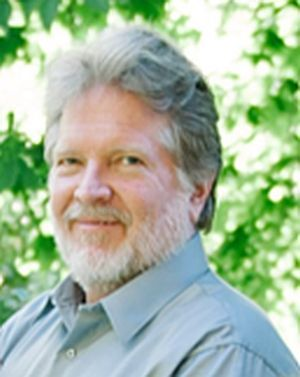
Four decades in foreign technology development and transfer; funded laminar-flow research yielding U.S. patents and commercial applications.
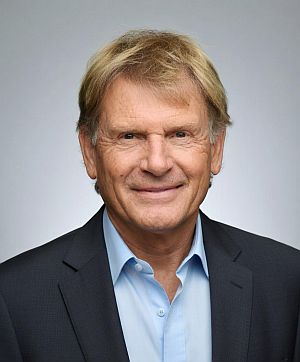
50 years of international management across Asia, the Middle East, Africa, and Europe; a top New Mexico land and ranch broker and organic cattle rancher.

25+ years in financial marketing and branding for Fortune 500s, hedge funds, and family offices; CEO of LJH Financial Marketing Strategies.
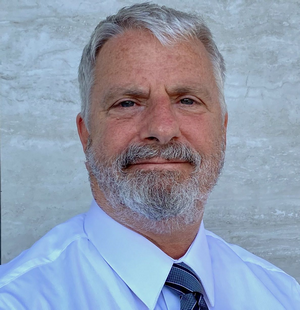
Entrepreneur and financial-structure engineer; has built 50+ companies and developed 3,000+ acres, structuring complex acquisitions and listings.
25 years in institutional investment management across credit, utility, and real-estate funds; EE, Summa Cum Laude, University of Michigan.

8+ years and 200+ MW of solar PV delivered across utility, industrial, commercial, and military projects, end to end through EPC and PPA.
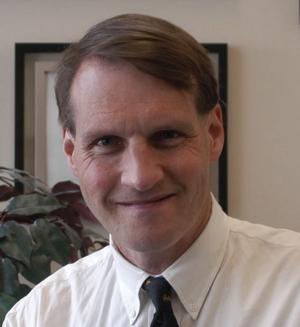
Contributor to the International Space Station cooling system and a Nobel Prize in Physics nominee; pioneer of rapid 3D-printed construction.
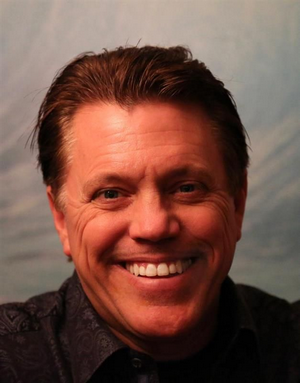
Former U.S. Air Force F-16 pilot; pioneer of basalt-graphene concrete and supercapacitor systems for infrastructure and energy storage.
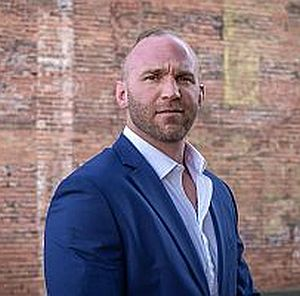
Because the campus is modular, employment begins early and grows steadily. Residents don't wait years for a single ribbon-cutting. The community sees results at every stage.
First modular block and energy-backbone start. First local hires begin.
Initial data center, storage, and pilot generation. First permanent jobs created.
Recycling, battery line, fuel-cell assembly, construction-materials and fertilizer lines scale up. Bulk of hiring.
Modular blocks repeat. Workforce at full strength; Foundation pipeline mature.
A proposed Chaves County 501(c)(3) non-profit with a single mission: move local residents into permanent campus careers, so the people who live closest to the campus are first in line for the jobs it creates.
Lake Arthur, Dexter, Hagerman, and Roswell. The communities closest to the campus get priority access to every opportunity.
Apprenticeships and certifications with ENMU-Roswell, NMSU, and Roswell ISD (FFA / 4-H). Credentials that lead to careers.
Local-first hiring with published local-hire targets and on-site career navigators guiding residents into permanent roles.
Scholarships, transportation and childcare assistance, plus local procurement and supplier-diversity programs.
Funded by an ongoing share of campus payroll and revenue, leveraged to capture state and federal workforce dollars (JTIP, LEDA, U.S. DOL apprenticeships, USDA). Proposed structure; charter, funding formula, and board to be finalized with county and community input.
Joint ventures and institutional relationships, not letters of intent alone.
Developer and campus owner. The integrating entity bringing all industries together on one site.
In-house engineering, procurement and contracting, keeping design and build expertise on campus.
Green-metal recycling.
Signed 15-yr take-or-pay · Dec 2025Battery-manufacturing joint venture. Technology licensor, minority owner, and engineering partner.
Signed JV · Dec 2025Advanced construction materials: basalt-graphene concrete, BFRP rebar, PermaStrong system, and 3D printing.
Japanese procurement channel. Sourcing fuel-cell units and connecting Japanese institutional capital and the Export-Import Bank of Japan.
Natural-gas supply.
Fully executed agreementIndependent federal tax-credit analysis and construction-basis review.
Economic-development partnership.
3D-printed structures integrated with graphene-basalt concrete, rebar, and supercapacitors for storage and EMP protection.

We provide integrated physical risk management for critical infrastructure projects. Campus security staffed by active and retired law enforcement and military veterans, trained in current threat-response practices.
Milestones as they land: signed agreements, joint ventures, and progress on the ground in Chaves County.
The latest on permitting, phasing, and the modular build sequence taking the campus from executed agreements to jobs on the ground.
Read releaseA signed JV to manufacture the Cellinity liquid-sodium battery in New Mexico, with BioLargo as technology licensor, minority owner, and engineering partner.
Read releaseA signed 15-year take-or-pay development and services agreement anchoring a 40-acre green steel and aluminum recycling plant on the campus.
Read releaseThe assets are in hand. The agreements are signed. The next steps are about partnership: with the county, the schools, and the community.
Commission a third-party economic-impact and workforce study to validate job and investment projections.
Establish the Community Foundation with county and community input: board, charter, and funding formula.
Formalize local hire, procurement, and training commitments with the Roswell-Chaves County EDC.
Build training tracks with ENMU-Roswell, NMSU, and Roswell ISD, FFA and 4-H pipelines included.
Activate JTIP, LEDA, DOL, and USDA programs to maximize state and federal support for local workforce development.
Building a manufacturing economy for Chaves County. Let's build it together.
Zenith Volts is early, executed, and ready for the partners who build the future. Reach out to explore investment, offtake, or a local-benefit partnership.